...

Sullivan Environmental Consulting, Inc.

  1. Home
  2. /
  3. Commercial Air Sampling

We’re Your Commercial Environmental and Air Sampling Experts!

Sullivan Environmental has experience in indoor air sampling, worker exposure assessment, industrial facility air sampling, and screening sampling in hazardous environments. 

Additionally, we can meet your on-site air sampling needs using applicable ASTM, EPA, OSHA, or NIOSH sampling methods. 

Commercial Air Sampling and Air Testing / Environmental Sampling is a service that we provide in the Washington, DC area, Nationwide, and Internationally.

At Sullivan Environmental, we have the capability to provide active and passive air quality sampling services for ambient airborne or industrial sampling. 

Additionally, we have managed over 60 large-scale flux studies involving up to approximately 1,500 air samples per study. 

Furthermore, after laboratory analysis, our staff, Certified Consulting Meteorologists and Certified Environmental Professionals, provide the modeling expertise to support the interpretation of data sets and to compute airborne flux from complex area sources.

Commercial air sampling and air testing are performed in accordance with GLP record-keeping standards for regulatory or worker exposure-related monitoring tasks. 

The air quality sampling equipment is complemented by six meteorological towers, 17 sonic anemometers, soil monitoring, noise monitoring, and odor monitoring capabilities.

Sensible heat flux, latent heat flux, and turbulent intensity analyses are measured to support the interpretation of flux studies, including the collection of on-field and off-field comparative data.

 Indoor and worker exposure studies are also conducted by our staff for commercial and industrial sources. 

These studies are based on both personal sampling and fixed-site sampling.

Air sampling (air monitoring) Services include:

  • Nationwide Air Sampling Consulting Services
  • Passive Air Sampling
  • Active Air Sampling
  • Particulate Sampling
  • Gas and Odor Sampling
  • Ambient Air Quality Sampling
  • EPA Method 0040 Sampling
  • Pesticide Air Sampling
  • Volatile Organic Compounds (VOC) Sampling
  • Industrial Worker Exposure Air Sampling
  • Dispersion Modeling Analysis to Assess Ambient Implications
  • NIOSH and OSHA Air Testing
  • Tedlar® Bag Sampling
  • Odor Sampling and Analysis via Odor Panel (Partner Company)
  • Air-Sampling-Air-Monitoring
  • Soil Sampling
  • Water Sampling
  • Bulk Sampling
  • Sludge Sampling
  • Wipe Sampling
  • Dioxin Sampling
  • Dust Sampling
  • Mold Sampling
  • Toxic Substances Testing
  • Comprehensive Environmental Sampling Services
  •  


Additionally, Sullivan Environmental developed the Fumigant Emissions Modeling System (FEMS), software that utilizes Monte Carlo simulations to more accurately predict airborne exposures to agricultural fumigants.


Furthermore, this system manages the initiation of an application, calculates emission rates over time, and incorporates weather conditions as variables. 


The FEMS system received review and approval from the EPA Science Advisory Panel. 



Additionally, a primary objective in creating the FEMS software was to establish a user-friendly platform that integrates the ISCST3, CALPUFF5, and CALPUFF6 models, aiding users in predicting near-field effects of pesticide applications in agricultural areas nationwide. 


See this link for additional background information on EPA regulatory models.  


The model’s output assists in estimating buffer zones based on predicted concentration levels concerning health-based regulatory thresholds. 


More information about the FEMS system is available by contacting Sullivan Environmental.


Additionally, the Fumigant Emissions Modeling System (FEMS) is structured to simulate between 200 and 100,000 years of operation in each model run. 


Furthermore, this allows for precise consideration of uncertainties in both emission and weather data.  Emission distribution formulation uses a land method to generate confidence intervals for natural log-normal medians. 


For various geographic locations reflecting agricultural areas, uncertainties in wind direction, speed, and atmospheric stability model the same. 


This is based on the emissions distribution and user-selected options.


In every scenario, a probability density function is established using expert judgment methods.  This is valuable when direct data for defining probabilities is limited.


The application probability function can indicate how frequently applications occur annually and the expected interval between them.


Users can also incorporate a fraction of the maximum application rate for reduced application rates per acre. 


Additionally, there are options for application types, including standard rectangular and circular configurations. 


This information is thoroughly accessed in the FEMS Users Guide. Contact Sullivan Environmental for a copy of the Fumigant Emissions Modeling System.
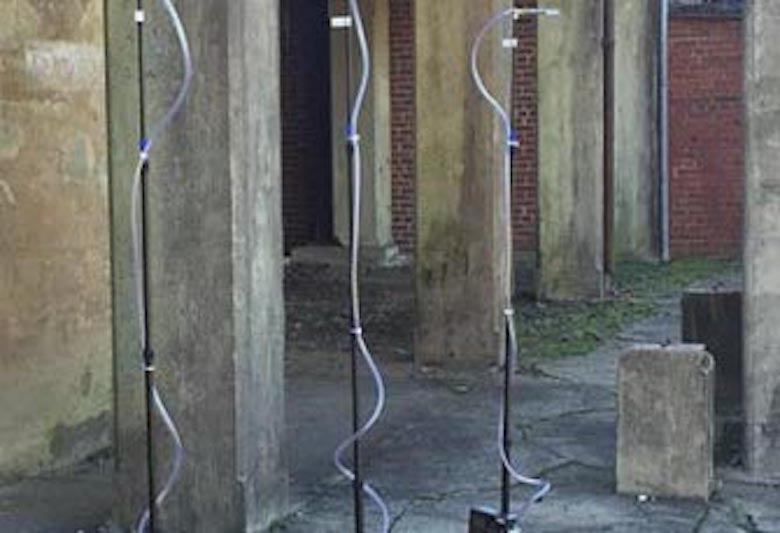
 

Commercial Monitoring
Advantages
Benefits

How Can We Help You With Your Air Quality Requirements?

Contact us today for all of your atmospheric air quality modeling, air quality monitoring, and expert air quality related litigation support needs.
Call Sullivan Environmental